
 Toggle Nav
Parts On Demand
High Performance Plastics
Onyx FR
Material Overview
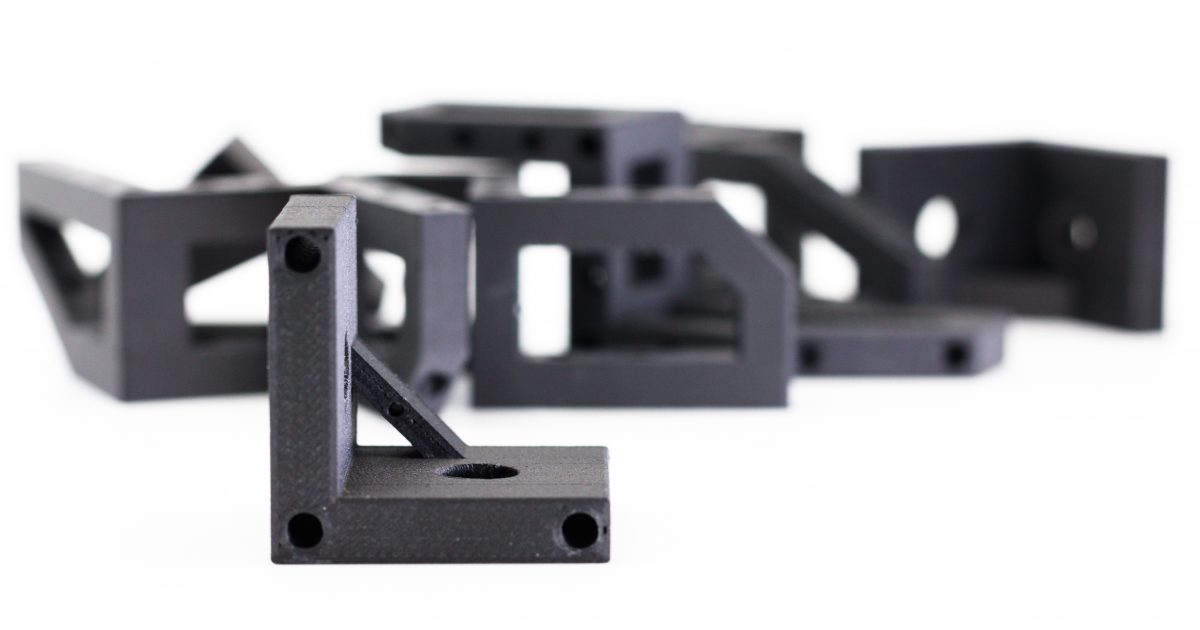
Onyx FR 3D printing material is a flame-resistant variant of Onyx designed for use in applications where parts must be non-flammable. The material earned a UL Blue Card, and is considered V-0 (self extinguishing) at thicknesses greater than or equal to 3mm. It can be reinforced with any Continuous Fiber and is compatible with industrial composite 3D printers.
Common Applications
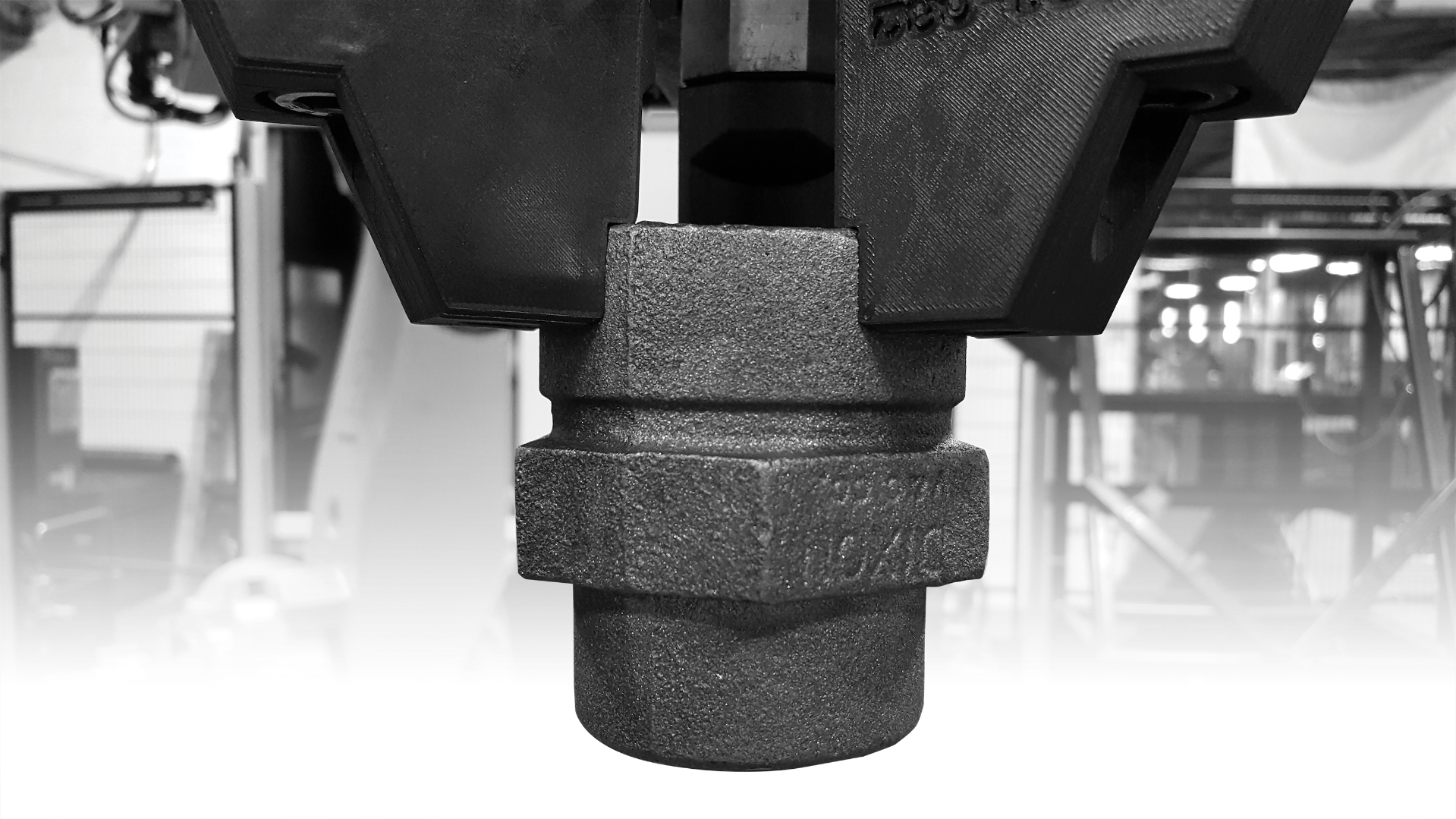
Weld Fixturing, Aerospace Clips & Brackets, Laser Marking Fixtures and Energy/Electrical Brackets & Fixtures
Key Material Properties
Certified UL 94 V-0 rated flame-retardant material
Excellent Chemical Resistance
Tough and Durable
Flexural Strength (MPA) 71
Tensile Strain at Break % 18
HDT at 0.4555 MPA 145°C
Maximum Part Size 330 x 270 x 200 mm (13 x 10.6 x 7.8 in)
Layer Thickness Options 50, 100, 125, 200, 250 Micron Layers
What is the 3D printing process for this material?
Onyx FR 3D is printed utilizing Markforged's FFF (Fused Filament Fabrication) 3D printing process. The Markforged FFF technology provides industry leading accuracy and reliability. Markforged industrial 3D printers offer strong parts with 50 μm repeatability and industry-leading surface finish.
Will there be support scarring on this part?
Since the Markforged 3D printer cannot extrude plastic into thin air without it collapsing, all parts of each layer must be connected to the layer below. Markforged FFF 3D printing technology utilizes peel away supports (made from the same material as the part) for any overhangs that require supports. Once the peel away supports are removed there will be support scarring on the part.
How long will it take before I receive my part in this material?
Production times vary depending on machine availability, but generally Onyx FR parts are printed and shipped within 3-5 business days.
What is the part accuracy and tolerances that this material can hold?
3D printing accuracy depends on a number of factors, including material, print settings, and part orientation. However, Markforged industrial 3D printers offer strong parts with 50 μm repeatability and industry-leading surface finish.
What are some of the specific design considerations when designing parts for this material?
When printing features that require high accuracy try to design or orient your part such that holes and other critical features lay flat on the print bed. Since the XY gantry is a unified motion system, printers produce far more accurate geometries on the XY (horizontal) than the XZ or YZ (vertical) planes. You can also reduce supports and overhangs Reduce supports and overhangs: Supports ensure that geometrically complex prints are successful; however, they also mar the supported surface and yield significantly less accurate features than sections that do not require support.
Upload A File To Get Started