
 Toggle Nav
Parts On Demand
High Performance Plastics
Markforged Continuous Fibers
Material Overview
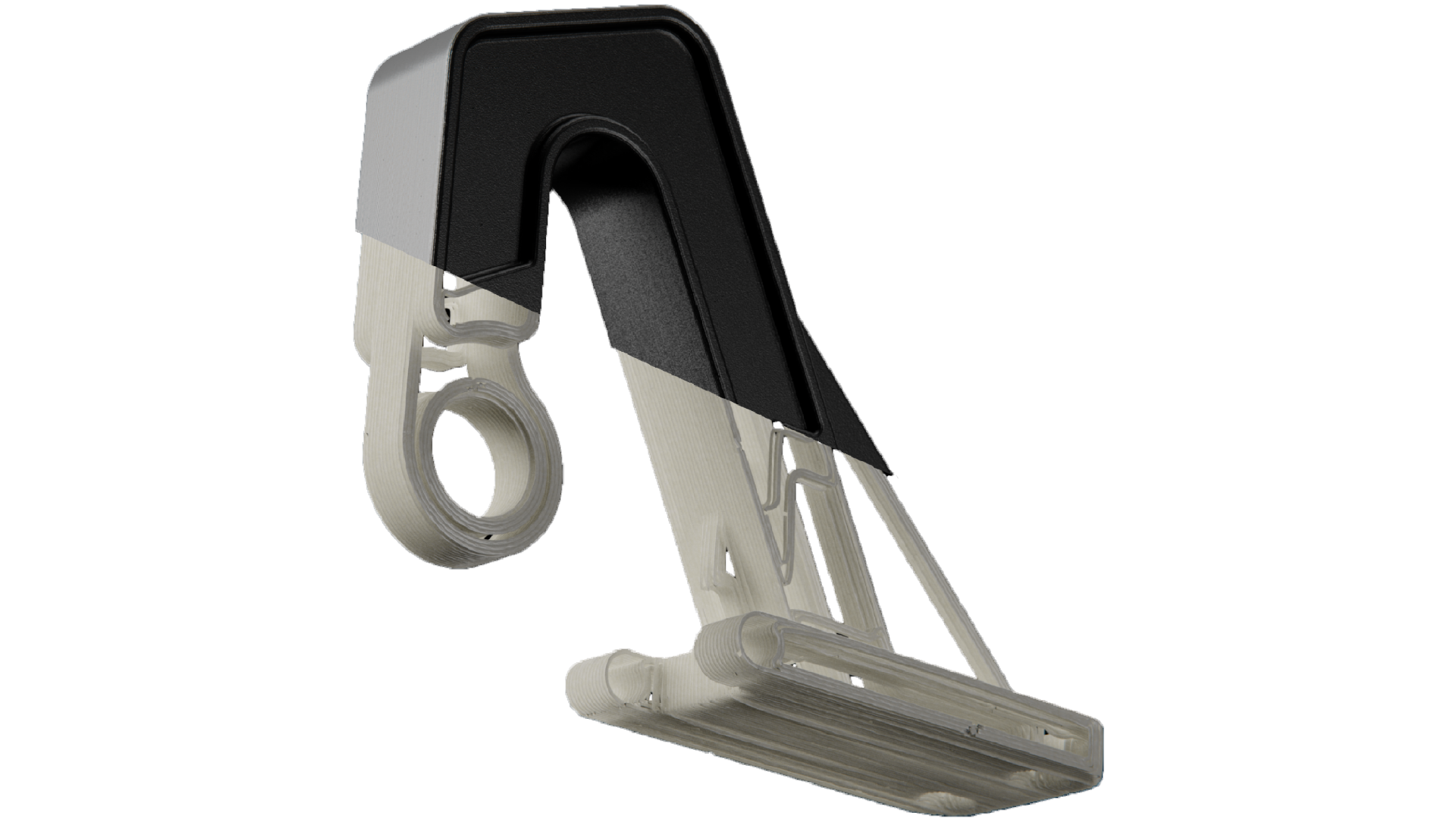
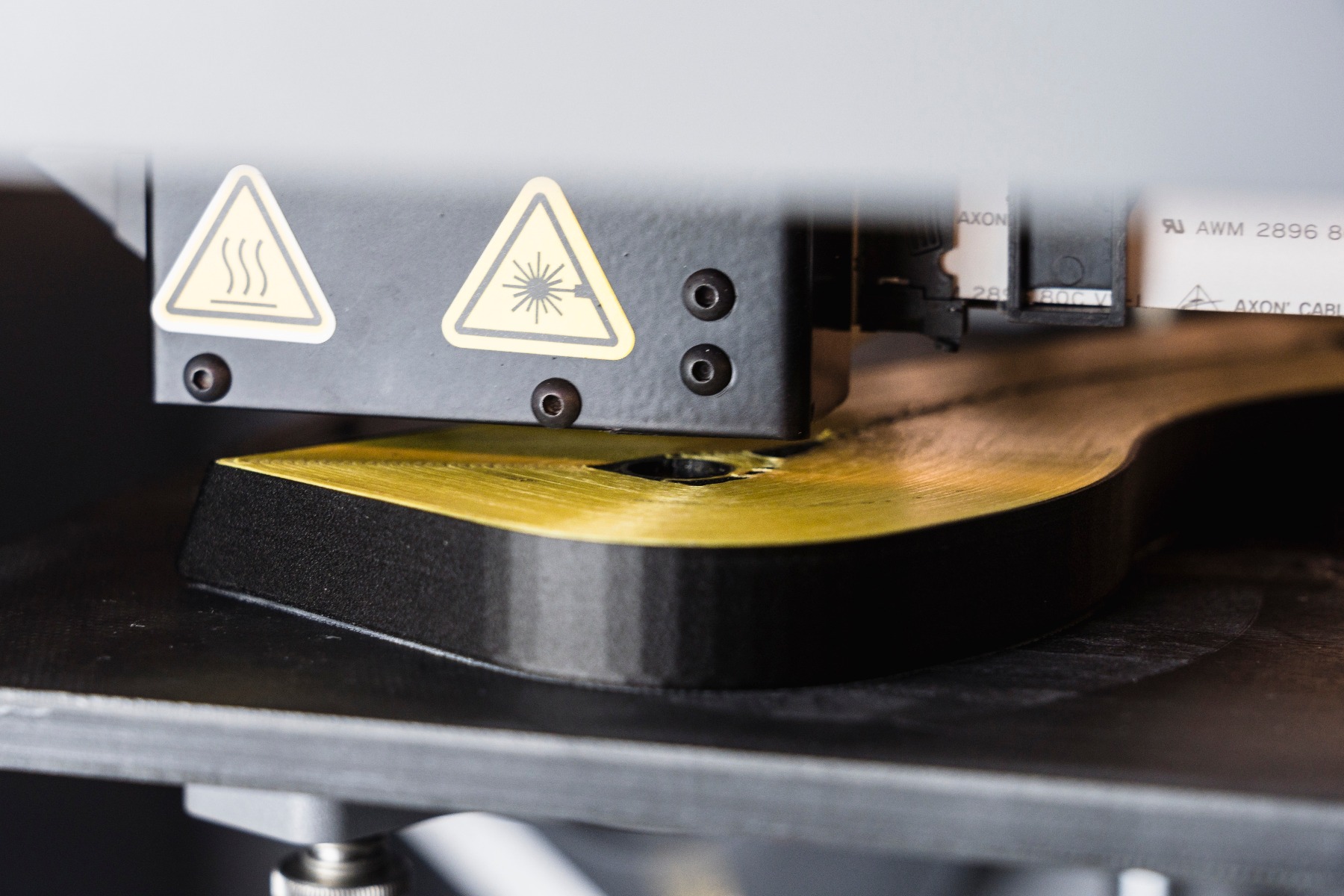
Continous Fiber Reinforcemen can only be combined with Markforged base materials (Onyx, Onyx FR, Onyx ESD, Nylon). Continuous fiber 3D printing adds continuous strands of fiber reinforcement to the part to achieve metal-strength properties at a fraction of the weight. Using two print nozzles, the printer builds the matrix material out of a thermoplastic, and irons down continuous strands of continuous fibers into the part. This process is called Continuous Fiber Fabrication (CFF). The power of CFF comes from the continuity of the strands. Unlike chopped fibers, continuous strands can absorb and distribute loads across their entire length. When placed within a thermoplastic matrix, the part can handle higher loads and absorb larger impacts.
Common Applications
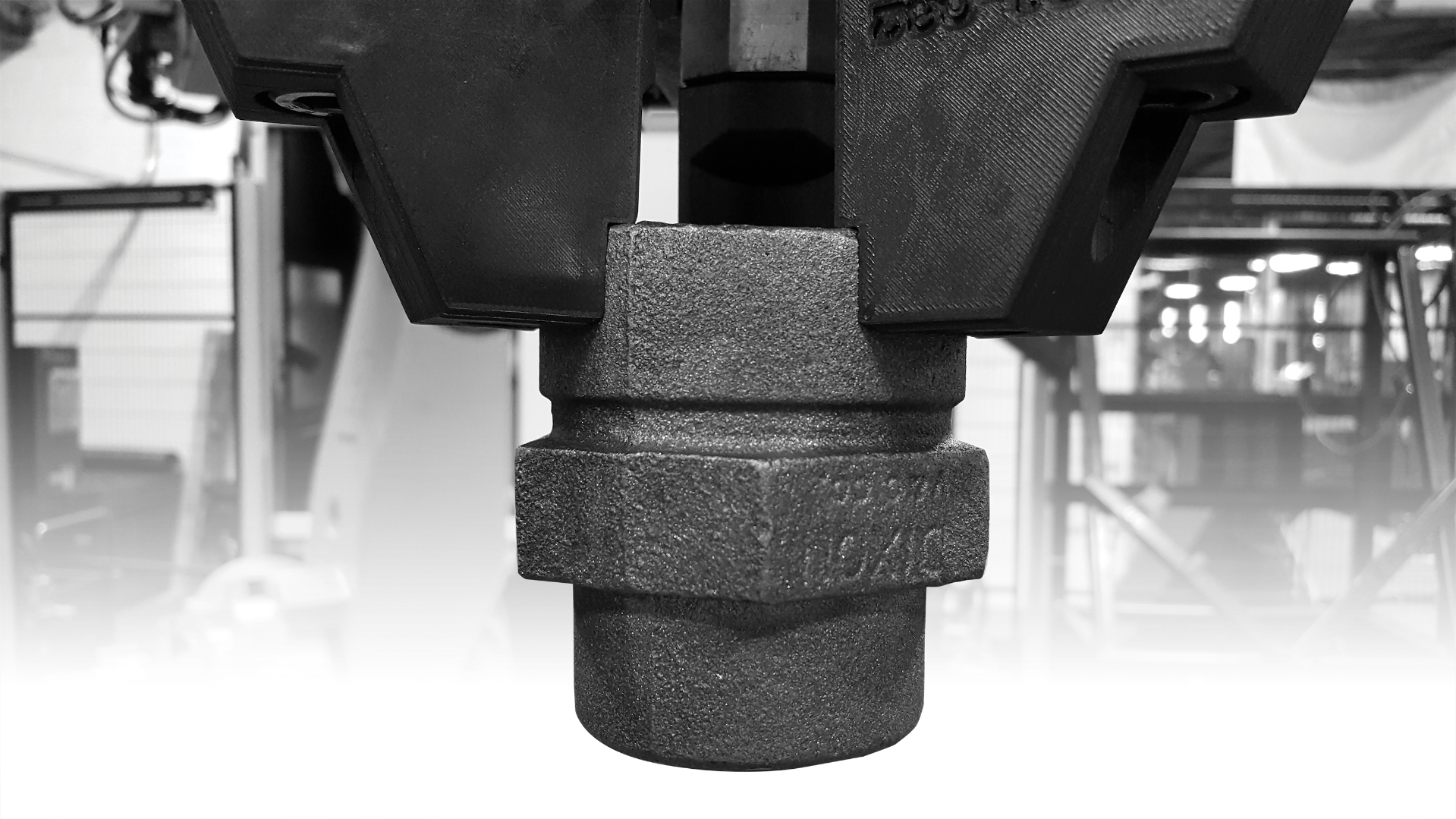
High-Strength Tools & Fixtures, Functional Prototypes, Delrin Part Replacements, Stanchions, Cradles, & Supports
Key Material Properties
Carbon Fiber — when laid into Onyx, can yield parts as strong as 6061-T6 Aluminum
Kevlar is tough and highly compliant for high-impact applications
Fiberglass is capable of yielding parts 10x stronger than ABS when laid into Onyx
Carbon Fiber - Flexural Strength: 540 MPa
Carbon Fiber has the highest strength-to-weight ratio of our reinforcing bers. Six times stronger and eighteen times stiffer than Onyx, Carbon Fiber reinforcement is commonly used for parts that replace machined aluminum.
Fiberglass - Flexural Strength: 200 MPa
Fiberglass is our entry level continuous fiber, providing high strength at an accessible price. 2.5 times stronger and eight times stiffer than Onyx, Fiberglass reinforcement results in strong, robust tools.
Kevlar - Flexural Strength: 240 MPa
Kevlar® possesses excellent durability, making it optimal for parts that experience repeated and sudden loading. As stiff as fiberglass and much more ductile, it can be used for a wide variety of applications.
HSHT Fiberglass - Flexural Strength: 420 MPa
High Strength High Temperature (HSHT) Fiberglass exhibits aluminum strength and high heat tolerance. Five times as strong and seven times as stiff as Onyx, it’s best used for parts loaded in high operating temperatures.
What do composites do for 3D printing?
Markforged composite fibers boost specific properties of traditional 3D printed parts - usually strength, stiffness, heat resistance, and durability. This gives them a strength advantage over more traditional thermoplastics used in 3D printing like ABS or PLA, so the applications of 3d printing can expand with these additional materials and the properties they bring to the table.
What is the difference between chopped fibers and continous fibers?
Chopped Fibersare short-length fibers chopped into segments less than a millimeter in length and mixed into traditional thermoplastics to form what is called a filled plastic. These can be printed with an FDM printing process.
Continuous Fibersrequire a slightly different 3D printing method, in which continuous fiber strands are coated in a curing agent and laid down into a thermoplastic matrix extruded via a secondary print nozzle. This process is called Continuous Fiber Fabrication (CFF).
Will there be support scarring on this part?
Since the Markforged 3D printer cannot extrude plastic into thin air without it collapsing, all parts of each layer must be connected to the layer below. Markforged FFF 3D printing technology utilizes peel away supports (made from the same material as the part) for any overhangs that require supports. Once the peel away supports are removed there will be support scarring on the part.
How long will it take before I receive my part in these material?
Production times vary depending on machine availability, but generally Markforged continuous fiber parts are printed and shipped within 1-3 business days.
What is the part accuracy and tolerances that this material can hold?
3D printing accuracy depends on a number of factors, including material, print settings, and part orientation. However, Markforged industrial 3D printers offer strong parts with 50 μm repeatability and industry-leading surface finish.
What are some of the specific design considerations when designing parts for this material?
When printing features that require high accuracy try to design or orient your part such that holes and other critical features lay flat on the print bed. Since the XY gantry is a unified motion system, printers produce far more accurate geometries on the XY (horizontal) than the XZ or YZ (vertical) planes. You can also reduce supports and overhangs Reduce supports and overhangs: Supports ensure that geometrically complex prints are successful; however, they also mar the supported surface and yield significantly less accurate features than sections that do not require support.
Upload A File To Get Started